About the club
- Details
- Written by: admin
- Category: Uncategorised
- Hits: 373
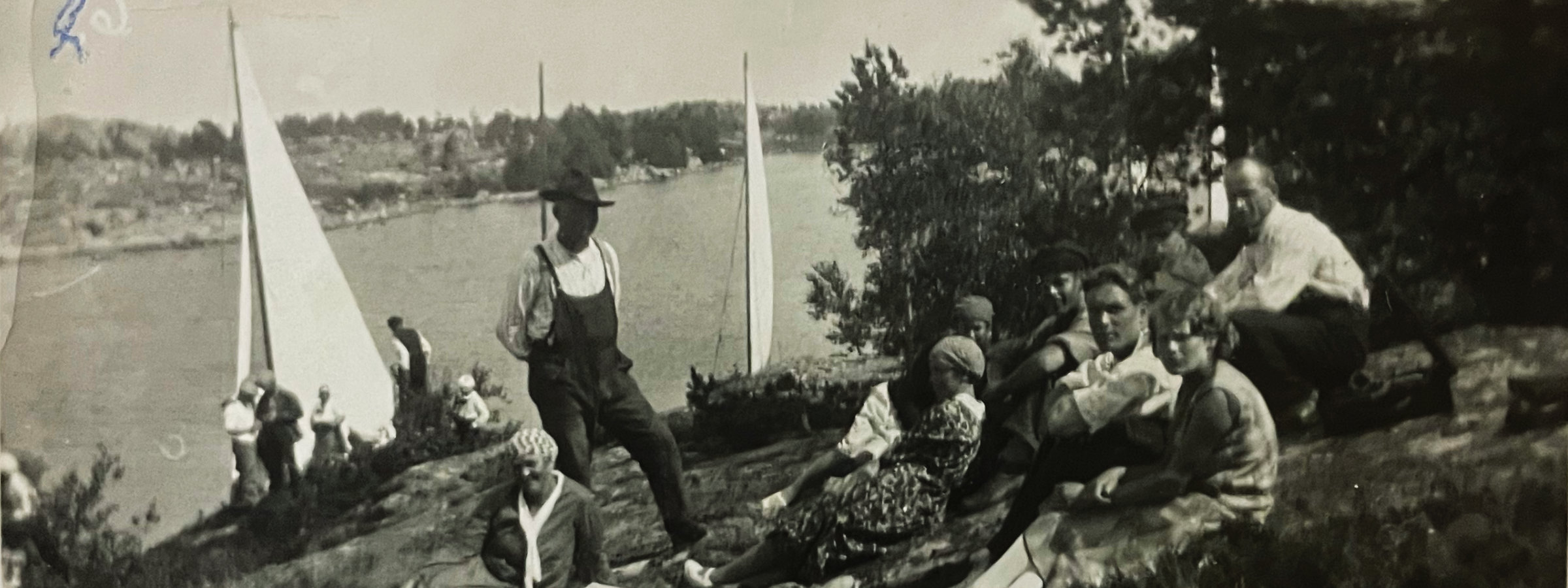
To understand how HUS came to be, we need to start with the centreboard sailboat in Hangö. On 5 July 1931, in connection with the Hangö regatta, it was announced that the centreboard boats — a traditional type of dinghy used by local fishermen and pilots — would no longer be permitted to participate in future Hanko regattas. That same evening, when the news became known, a group of sailors decided to break away from the existing club and form their own association. That group became Hangö Udds Segelsällskap r.f.
According to legend, several swedish speaking sailors from Hanko had long been interested in forming their own club specifically for centreboard boats. The decision to found such a club is said to have actually been made as early as 1930, at J.V.H. — the railway hotel by the market square in Hanko, where Aktia and the pharmacy now stand — though the constitutive meeting followed in September 1931.
The association now known as HUS, soon formalised its own specifications for the centreboard boat: the rules were adopted in 1932, specifying pine and spruce planking, oak or ash frames and spruce spars. The sail area rules were more generous than for example the haj class, and racing was held in both large and small classes. The drawings for the HUS centreboard boat were made by Thure Johansson, known as Maltskärarn.
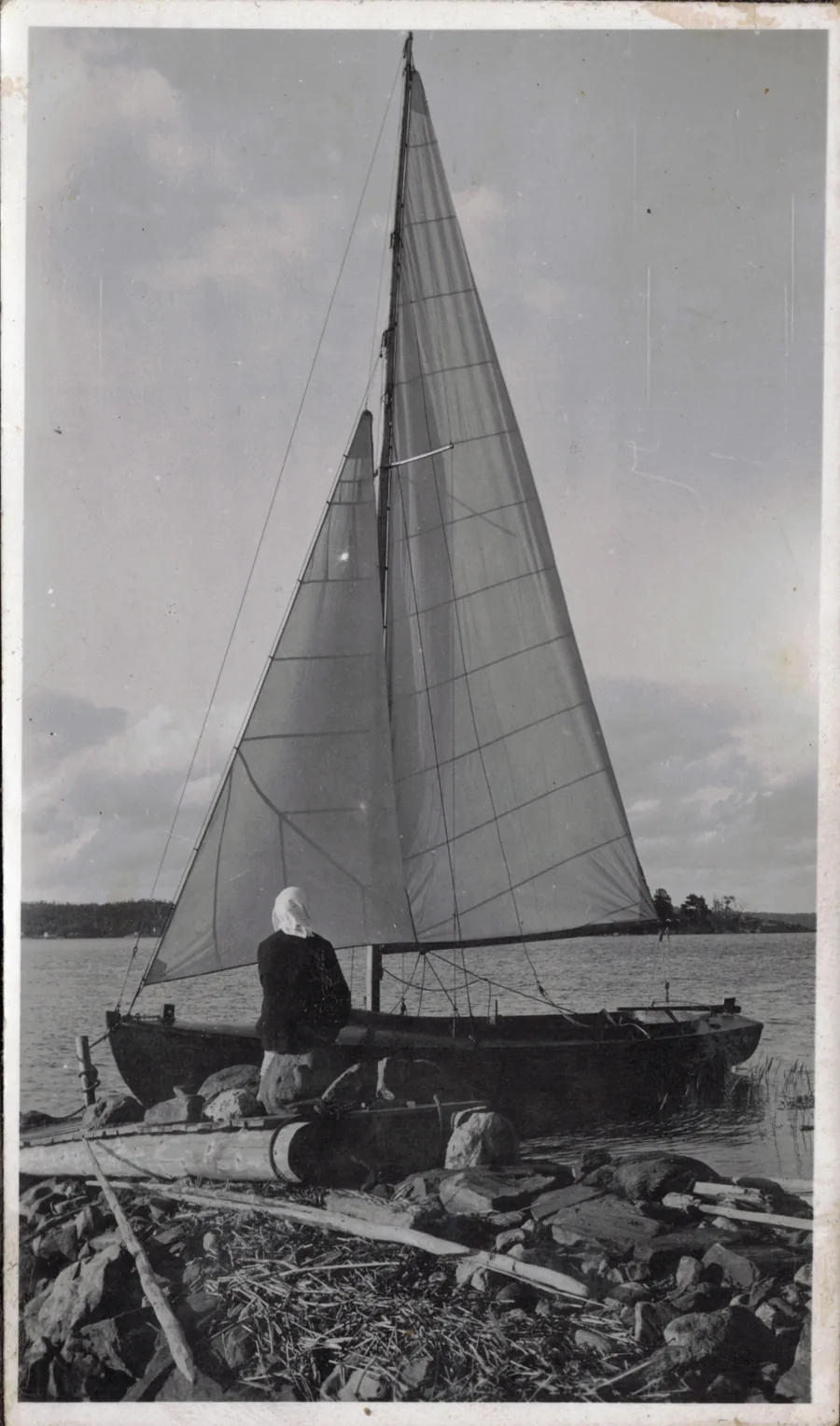
Among the centreboard boats that sailed during the club’s early decades, notable examples include Bris, built by Maltskärarn himself, as well as Walter Johansson-Juup's Tabu and Harry Sandberg’s Marianne. It is worth mentioning that Sandberg later also built a junior centreboard boat, Albertina, for Tom Vatanen. From 1958, centreboard boats no longer appear in HUS’s boat register. Today Bris is preserved in a museum and Tabu stands inside one of the sheds at the slipway.
Although the era of centreboard boats had passed, one more was built in 2004 according to Thure Johansson’s drawings by boatbuilder Eero Ranta, for the Swiss sailor Yves Paternot, who had searched the world over for a good centreboard boat for his summer property, where the water was shallow in places.
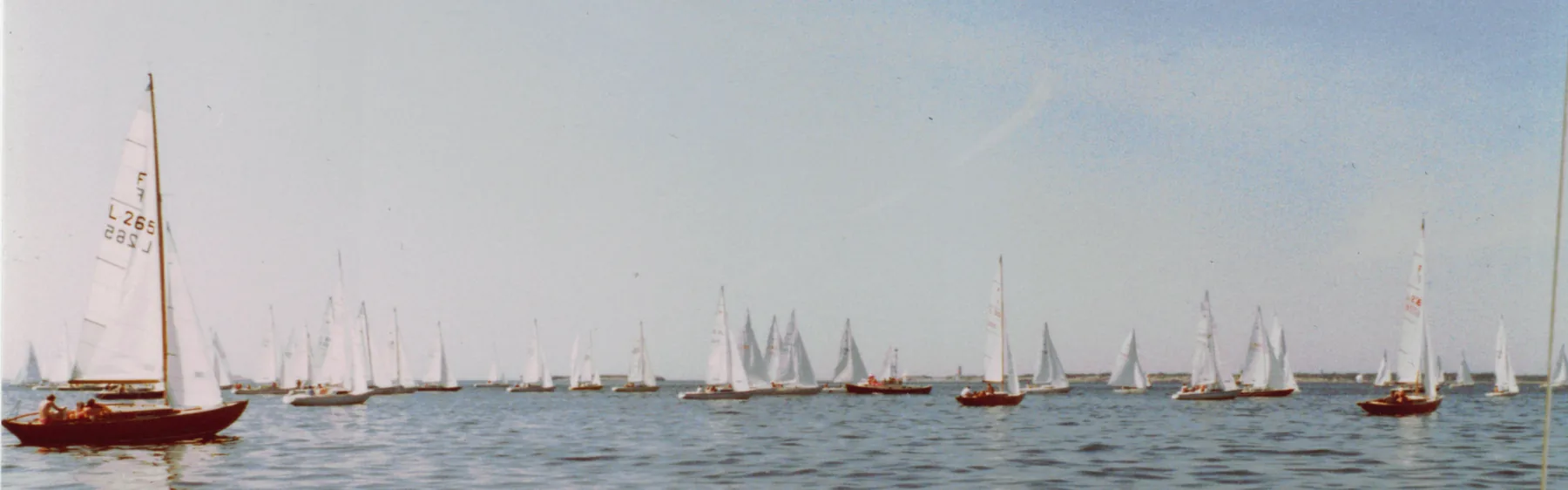
Just as sailing a traditional boat once defined a certain way of life, the north side has become a matter of identity for what it means to be a hussare. Unlike the southern side, the waters north of Hangöudd offer conditions for varied and rewarding sailing. To the north lies beautiful archipelago and the shallow passages the centreboard boat was built for. To the west, past Dödören, the open Baltic awaits those who want to venture out onto wider waters. This makes the north side an excellent home harbour for both the more adventurous members and the relaxed day sailor — then as now.
For the hussare, the sailing season runs from the beginning of May to the end of September. The club traditionally holds its own races on home waters, and when interest is sufficient, longer passages too — such as the voyage to the twin town of Haapsalu in Estonia, a tradition going back to the 1990s.
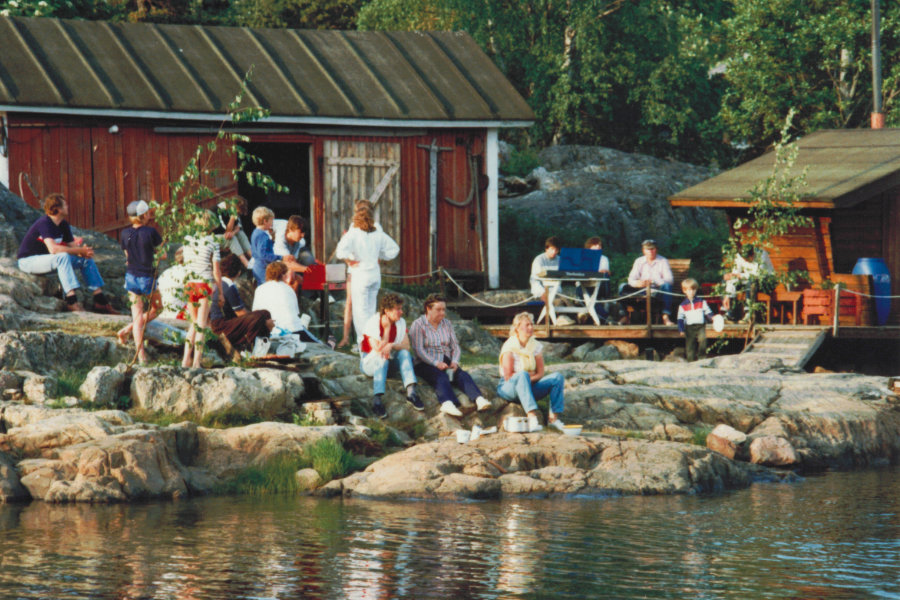
For many hussare, Holma is as much a home as it is a harbour. The archipelago property Västervik on Holma in Dragsfjärd was acquired in 1981, financed through members' own fundraising, lotteries and an additional Holma fee that was paid off by 1989. It is worth noting that in 2005, 650 people in 272 boats recorded their visits in the guest book — not a bad result at all. Holma lies 19 nautical miles from the slipway in Hangöby.
Beyond life on the water, the hussare can still be found at the flag-raising in spring and the flag-lowering in autumn, at the clubhouse on Västfjärdsvägen 1, and early in spring at the slipway in Hangöby, long before the boats go out. Though older traditions such as masquerade parties have faded, the HUS sailors still gather together with members of the motorboat and ladies’ sections for the pea soup (Ärtsoppan) evening — a tradition as old as the club itself.
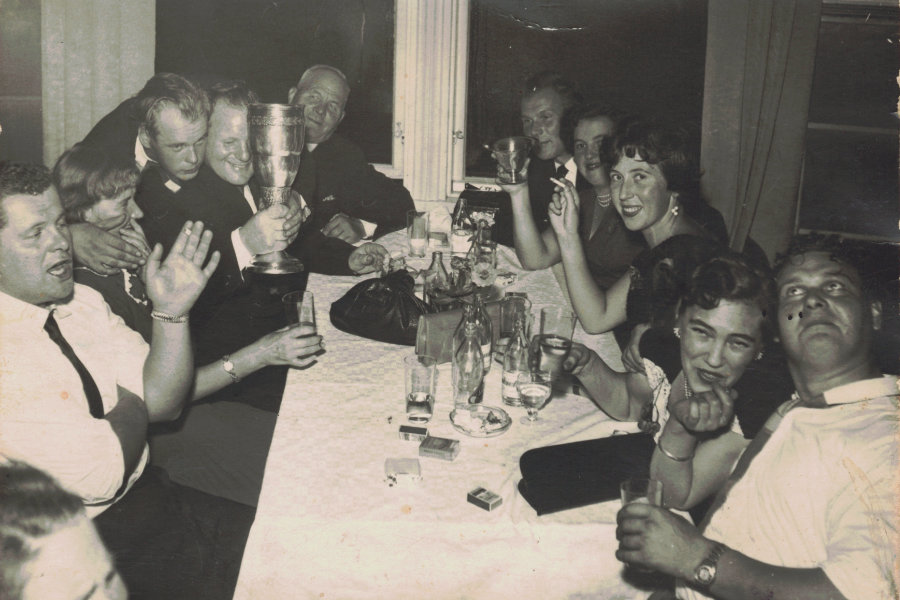
Although the club began as a group of defiant breakaways, the foundation of HUS has always been fellowship and cooperation among its members. Being a hussare is associated with modesty, yet once an idea has been sparked, action has followed: if something needed to be built, it was built; if something was broken, it was repaired; and when finances were tight, projects were nevertheless brought to completion. In boating life as well, the focus has been on what is essential. From day one, it has been about sailing, boats maintained by their owners, and time spent on the water. That is the common thread in what it means to be a hussare.
The Ladies' Section
Although the club has several sections — including the motorboat, junior and canoe sections — one section above all deserves a special mention, namely the ladies’ section. Already at the constitutive meeting in 1931, the women organised themselves around the association. With the dedicated Edit Westerholm at the helm, the ladies' section arranged fundraisers, sewing circles and lotteries, and by 1934 the women had gathered enough to order the club’s first pennant. It was presented to the then commodore Schultz at the annual meeting by Westerholm herself.
At its core, the ladies’ section has been one of the most important pillars the club has leaned on throughout its history. The section funded things that would otherwise not have existed: the sauna's furnishings, the kitchen’s equipment, the curtains in the pavilion. The resourceful women sewed mattresses and cushions, built furniture together with other handy members, and of course made sure there were sandwiches for the men and food and drink when a celebration was approaching. The pea soup, already mentioned, lives on as one of the club’s oldest traditions.
on the same waters
After centreboard boats are excluded from Hangö's existing regatta, a group of sailors gathers on 5 July and decides to form their own association. The constitutive meeting is held in September. First commodore: Arndt O.W. Schultz, who also designs the club’s emblem and flag.
The association obtains the lease to a shoreline area at Skogsnäset in Hangöby and constructs a slipway. Built by the club’s own members, it remains one of the most important facilities for the club.
During an ongoing war, the members raise 60,000 marks and purchase the former Strandcafé in Hangöby, converting it into a club venue. The clubhouse is inaugurated on 11 December 1944. Five years later the restaurant wing is added. The restaurant was run for several years by Margareta Vatanen.
A handful of Haj-class and folkboats leave Hangöby bound for Sandhamn and represent HUS at the KSSS 125th anniversary. Along the trip occured: a 33 m/s storm across the Åland Sea, a grounding near Lökholm, and a pike eaten on prohibited military territory.
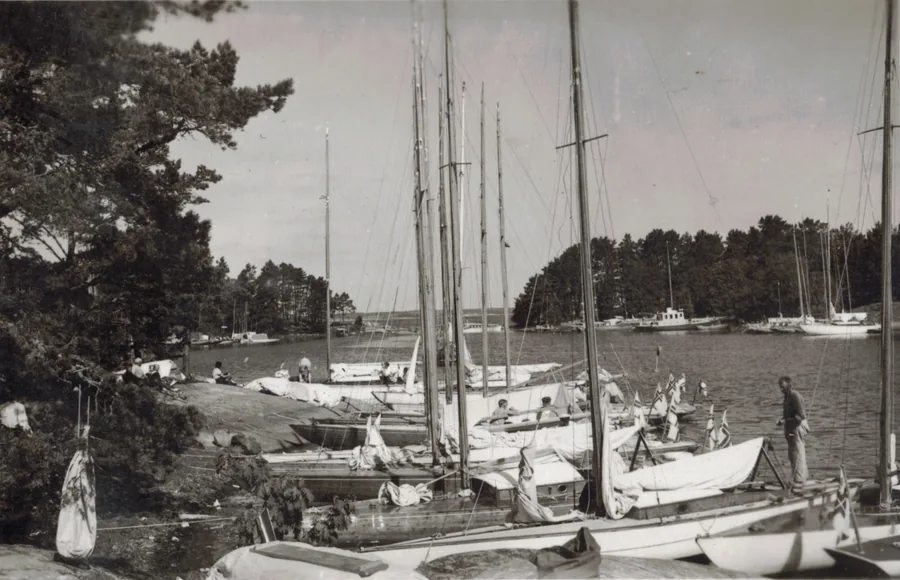
The 50th anniversary year. The club purchases Västervik on Holma in Dragsfjärd for 300,000 marks, financed through lotteries, auctions, disco evenings and an extra membership fee. Today still an essential summer destination for majority of HUS members.
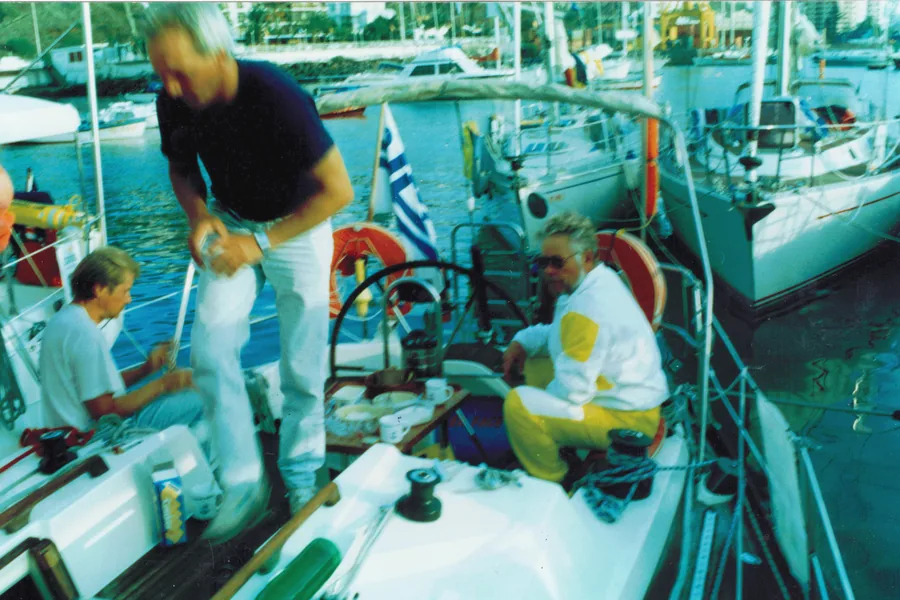
Pertti Korhonen together with a crew of HUS-members participate in the America 500 race. The route runs from Huelva via Madeira and the Canary Islands to San Salvador in the Bahamas. The first time the HUS flag is raised on the Atlantic.
In Hangö “the summer of sailing” is declared and HUS celebrates 75 years. The Finnish laser championships are held in Hangöby harbour. The anniversary publication is released, compiled by Benita Forsman from archives, minutes and the sailors’ own accounts.
In 2031 HUS turns one hundred. What that will mean, we do not yet know — but it is unlikely to pass quietly.
& board 2025
| Commodore | Johan Berglund | 040 770 7930 | |
| Vice Commodore | Mikael Kilpi | 050 581 0307 | |
| Secretary | Bernt Förström | 040 778 6274 | |
| Treasurer | Eva-Stina Sjödahl | 040 768 9048 | |
| Motorboat section representative | Sami Muranen | 040 664 4114 | — |
| Svante Sandberg | 0400 471 808 | ||
| Magnus Sjödahl | 040 847 5013 | ||
| Tom Vatanen | 0400 877 410 | ||
| Auditor | Ann-Marie Huldin | 040 573 1418 | — |
| Deputy | Johan Puumala | — | — |
Hangöby